About
Bio
Marco Noris (Bergamo, Italy, 1971) is a visual artist who has been based in Barcelona since 2003.
His practice is built around walking as a research tool, exploring the intersection of landscape, territory, historical memory and the body. He develops projects that combine painting, photography and audiovisual practices. He has exhibited in galleries, art centres and museums across Spain and internationally. He was one of the initiators and founders of La Escocesa as a creation factory in Barcelona. He currently has his studio at Piramidón, a centre for contemporary art in Barcelona.
His work is held in the National Collection of Contemporary Art of the Generalitat de Catalunya.
Another biography is possible.
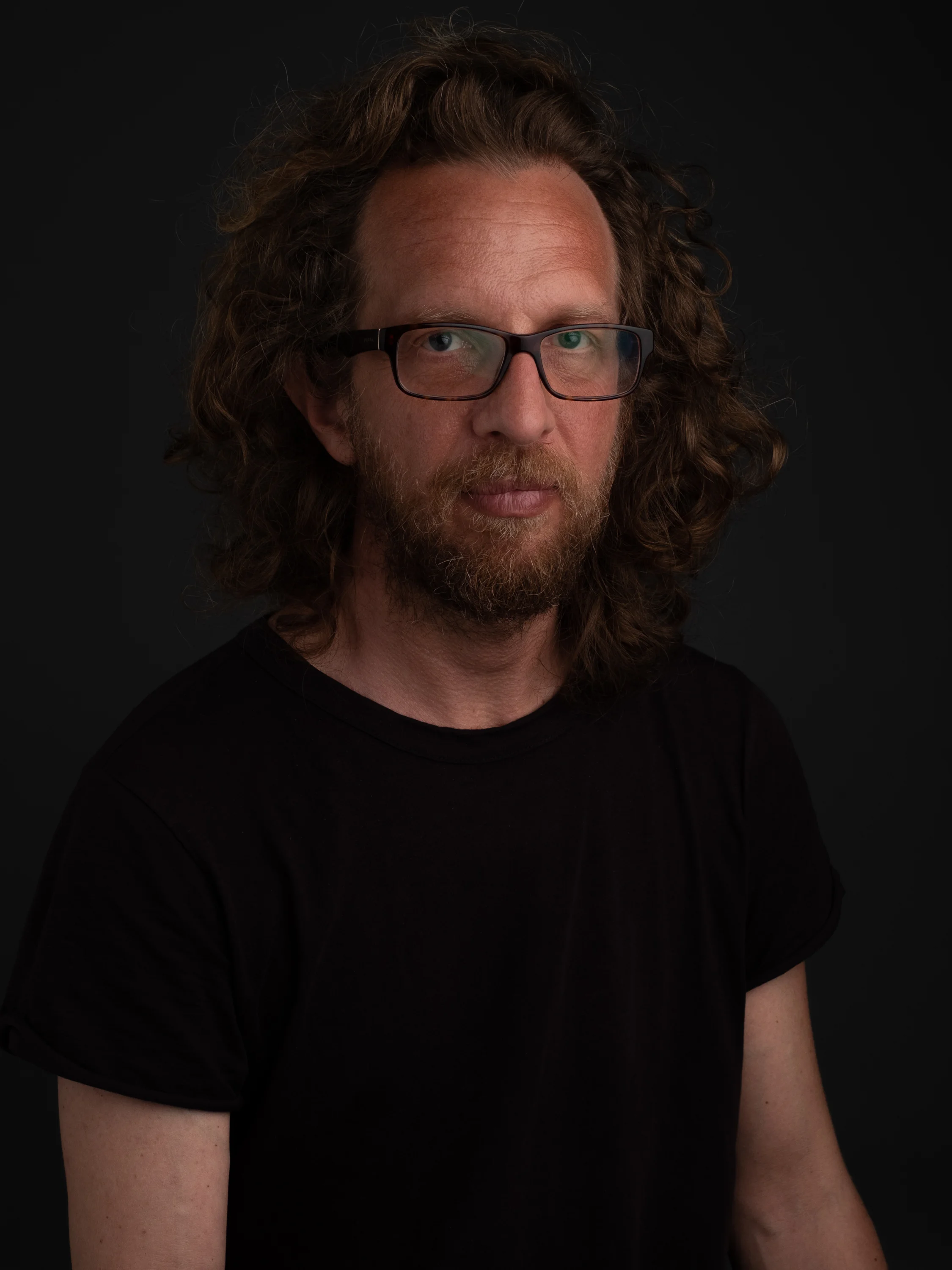
Marco Noris. Photo by Michele Morea
Contact
Alternatively, you can send an email to hola+lab@marconoris.com.
Notes on the now
From time to time, I send email updates with news, new posts, ideas, texts, and ongoing projects. You can subscribe using the form below to receive them. The archive is available at Notas sobre el ahora on Substack.
I also gather the now in the Lab: fast and ephemeral updates, short notes, recent links, and changes that do not need a full website deploy.
This site
Keyboard shortcuts
- Help: /
- Search: shift+K · Cmd+K · Ctrl+K · Esc
- Toggle light/dark: shift+D
- Go home: shift+H
- Projects: shift+P
- Exhibitions: shift+E
- Series: shift+S
- Themes: shift+T
- News: shift+N
- Libellus: shift+L
- Related: shift+R
- Contents: shift+I
- Previous/next: shift+← · shift+→
This website is built on a simple architecture that prioritizes autonomy and long-term preservation. Rather than relying on commercial services such as WordPress or Wix, the pages are automatically generated from text files stored on my own computer and published from an environment I manage directly. This allows me to retain ownership and control over my content, without depending on third parties or closed formats, and avoids having to start from scratch each time I change tools or platforms.
This choice aligns with the file over app philosophy: applications are ephemeral, while files —readable, portable, and under your control— can endure over time. For me, it is a way of caring for materials —texts, images, notes— and ensuring they remain accessible in the long term, without lock-ins or platform-imposed dependencies.
From a technical standpoint, Libellus1 is automatically generated with Jekyll and deployed on Cloudflare from a GitHub repository. In parallel, a complete local copy of the site is maintained on my computer, making it possible to move the static version to other servers if needed.
A Ruby plugin, developed ex novo, rewrites Obsidian’s wikilinks and custom syntax to ensure semantic and structural compatibility between Jekyll, the Obsidian vault, and the web publication at lab.marconoris.com via Obsidian Publish.
Credits
The site uses the Flexoki color palette by Steph Ango, following principles of functional minimalism inspired by his own web work. From the Kepano ecosystem, the Image Grid developed for Obsidian has been integrated (as always, thanks, Steph).
Icons come from Lucide; search runs on Fuse.js and galleries on PhotoSwipe. Maps are built with Leaflet and leaflet-gpx, and their cartography comes from ICGC (Institut Cartogràfic i Geològic de Catalunya) and IGN (Instituto Geográfico Nacional, Spain).
The ouroboros accompanying Ouroboros Lab comes from the cover of Serge Hutin, Los gnósticos (Buenos Aires: Editorial Universitaria de Buenos Aires, 2nd ed., May 1976). The engraving accompanying the Vivarium is an Acanthus mollis seedling, taken from Charles Darwin, The Power of Movement in Plants (London: John Murray, 1880), fig. 58 — public domain. The tracing on the Vivarium page is the circumnutation of a young Cycas pectinata leaf, from the same work, fig. 45.
-
Libellus: from Latin, diminutive of liber (book), ‘little book’, booklet; a small volume for notes, poems, epigrams, or brief treatises. Today, Libellus is a living notebook: an archive in motion, notes along the way, and pieces that, together, form a larger body. ⤶